

Introduction
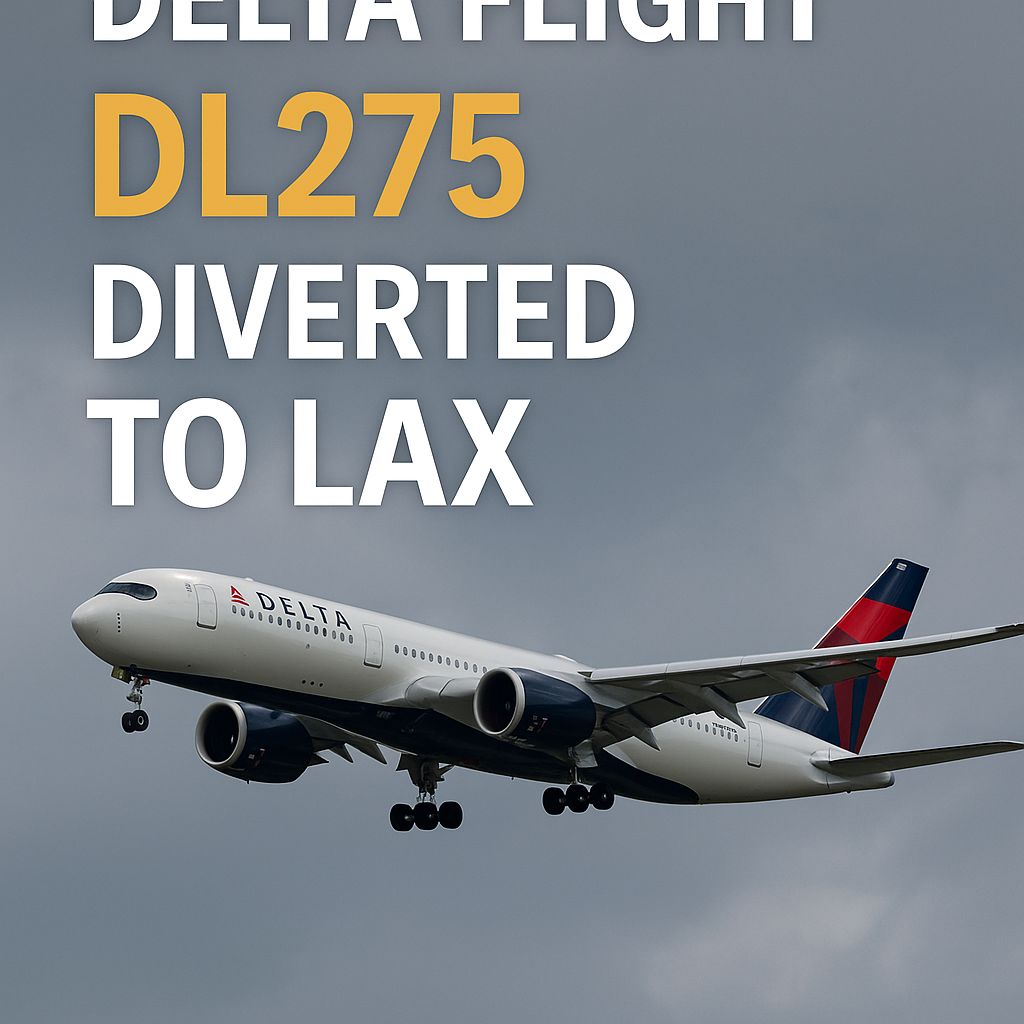
Air travel is one of the safest modes of transportation in the world, but sometimes, unexpected situations occur that remind us just how important safety is in aviation. One such event was when Delta Flight DL275 diverted to LAX instead of reaching its intended destination. This incident quickly gained attention, not just from passengers and their families, but also from aviation enthusiasts and the wider traveling community.
In this article, we’ll explore everything about DL275 (DAL275) Delta Air Lines flight tracking and history, the details of the diversion, what passengers experienced, how the airline responded, and most importantly, the aviation safety lessons we can all learn from this incident.
DL275 (DAL275) – Flight Tracking and History
What is Delta Flight DL275?
Delta Flight DL275, also tracked as DAL275, is a long-haul international flight operated by Delta Air Lines, one of the largest carriers in the United States. The flight typically connects Seattle (SEA) or other U.S. hubs to Tokyo-Haneda (HND) in Japan.
Usual Route and Destination
Under normal operations, DL275 follows a transpacific route, lasting approximately 10–11 hours. The flight takes passengers across the Pacific Ocean, connecting North America with Asia, making it a vital route for business, tourism, and family travel.
Flight History and Operational Background
Over the years, DL275 has completed thousands of safe journeys. Like all major Delta routes, it is operated by long-haul aircraft such as the Airbus A350-900 or Boeing 767-300ER, both known for their reliability and advanced safety features.
Delta Flight DL275 Diverted LAX – What Really Happened
Mid-Air Situation Explained
On its way to Japan, DL275 faced a situation that required a mid-air diversion. After nearly five hours into the journey, the flight crew made the difficult decision to divert and head toward Los Angeles International Airport (LAX).
Decision to Divert After 5 Hours of Flight
The diversion was not immediate; the pilots monitored the situation closely before deciding that safety came first. Rather than continuing toward Japan, they chose to land at LAX, which is well-equipped to handle international arrivals and emergencies.
Timeline of the Incident
-
Departure: The aircraft departed as scheduled toward Tokyo.
-
Mid-flight: Around five hours into the journey, irregularities were identified.
-
Diversion: Pilots declared the need to divert and set course for LAX.
-
Landing: The aircraft landed safely at LAX, where it was inspected, and passengers were cared for.
Why Was DL275 Diverted to LAX?
Potential Technical Issues
Although Delta did not immediately disclose all details, diversions often occur due to technical irregularities—sometimes involving pressurization, fuel systems, or engine alerts.
Weather and Operational Factors
Bad weather in Japan or en route could have also been a contributing factor. Airlines always prefer landing at an alternative safe airport rather than risking turbulence or storm patterns.
Safety Protocols Followed
Regardless of the reason, one fact is clear: the pilots followed strict FAA and Delta Air Lines safety protocols, ensuring passengers were never put at unnecessary risk.
Passenger Experience During the Incident
Accounts from Onboard Travelers
Passengers reported feeling a mix of confusion and relief. At first, many didn’t understand why the aircraft was turning around, but once announcements were made, most felt reassured.
Cabin Crew Response and Reassurance
Delta’s cabin crew played a crucial role—remaining calm, serving refreshments, and reassuring passengers that the diversion was precautionary, not an emergency.
Emotional Impact on Passengers
While some passengers expressed frustration about delays, the majority were grateful that safety was prioritized over schedule.
Inside the Cockpit – How Pilots Handle Diversions
Communication with Air Traffic Control
As soon as the decision was made, the pilots coordinated with air traffic controllers, who guided the aircraft toward the safest and most efficient diversion route.
Step-by-Step Cockpit Decision-Making
Pilots follow a checklist approach:
-
Identify the irregularity.
-
Consult operating manuals and instruments.
-
Communicate with dispatch and ATC.
-
Decide whether to divert, continue, or return.
Standard Operating Procedures for Diversions
Delta, like all major airlines, trains pilots extensively for these situations. Diversions are seen as preventive measures, not emergencies.
Airline Response After the Diversion
Delta Air Lines Official Statement
After the incident, Delta issued a statement emphasizing that passenger safety was the top priority and that the diversion was made “out of an abundance of caution.”
Passenger Re-Accommodation and Support
Affected passengers were rebooked on later flights to Japan. Delta provided meals, hotel accommodations if necessary, and assistance with re-routing.
Customer Service and Refunds
In many cases, airlines like Delta also offer travel credits or partial refunds for inconvenienced travelers.
Aviation Safety – Lessons from DL275
Why Diversions Are a Sign of Caution, Not Failure
For passengers, diversions can feel scary. But in reality, they show the system is working—pilots and airlines would rather inconvenience travelers than take unnecessary risks.
Importance of Redundancy in Aviation Safety
Modern planes are built with multiple systems for backup. Even if one issue arises, diversions ensure no situation escalates.
Passenger Trust and Airline Reputation
By handling DL275 responsibly, Delta reinforced its reputation as a reliable airline that values safety above all else.
Comparisons with Similar Incidents
Other Flights Diverted Mid-Air
It’s not uncommon for flights to divert. Airlines worldwide regularly face situations requiring reroutes for mechanical, medical, or weather reasons.
How DL275 Fits Into Wider Aviation Safety Trends
DL275 was just one of many flights that highlight how diversions are standard practice in aviation safety management.
Lessons Learned by the Industry
The aviation industry constantly studies these events to refine safety protocols and enhance passenger communication.
Flight Tracking and Real-Time Passenger Updates
How Passengers’ Families Tracked DL275
Flight tracking apps like Flightradar24 and FlightAware allowed families to watch DL275’s unexpected diversion in real-time.
Role of Flight Tracking Apps
These apps help reduce panic and confusion, providing transparency about what’s happening in the air.
Transparency in Airline Communication
Airlines are learning to combine official statements with real-time updates to keep everyone informed.
What Happens After a Diversion?
Aircraft Inspection and Maintenance Checks
Once on the ground, the diverted aircraft undergoes a full technical inspection to determine what triggered the diversion.
Logistics of Crew Rest and Flight Rescheduling
Because of legal limits on pilot working hours, diversions often mean rescheduling with fresh crew.
Compensation Rights for Passengers
Passengers on DL275 were eligible for rebooking, and depending on the delay, possibly compensation in line with airline policies.
Human Side of the Story
Passenger Resilience and Patience
Despite disruptions, many passengers expressed appreciation for the crew and pilots.
Crew Professionalism Under Pressure
Cabin crew remained professional, demonstrating why they are trained for calm and crisis management.
Social Media Reactions to DL275
The story of DL275 spread on Twitter, Reddit, and aviation forums, with many praising the decision to prioritize safety.
Future of Aviation Safety
How Diversions Improve Flight Safety Procedures
Every diversion adds to aviation knowledge, strengthening safety protocols.
Advances in Predictive Technology for In-Flight Safety
New AI-driven tools help airlines predict mechanical issues before they become serious.
Building Stronger Passenger Confidence
The more passengers see safety prioritized, the more confidence they have in air travel.
Conclusion
The story of Delta Flight DL275 diverted to LAX is more than just a flight delay—it’s a real-life example of how the aviation industry consistently puts safety first. While passengers experienced frustration, the decision to divert ensured that everyone landed safely. For Delta, this incident reinforced the importance of caution, communication, and care in maintaining passenger trust.
FAQs
Why was Delta Flight DL275 diverted to LAX?
DL275 was diverted due to safety concerns, which may have involved technical or operational factors.
How long was the flight before diversion?
The plane had been flying for around five hours before the decision was made.
Were passengers compensated?
Yes, Delta rebooked passengers and, in many cases, provided meal vouchers and accommodations.
Is it common for flights to divert mid-air?
Yes, diversions happen more often than people realize, usually as a precautionary measure.
What happens to the aircraft after a diversion?
The aircraft undergoes a complete technical inspection before it can fly again.